
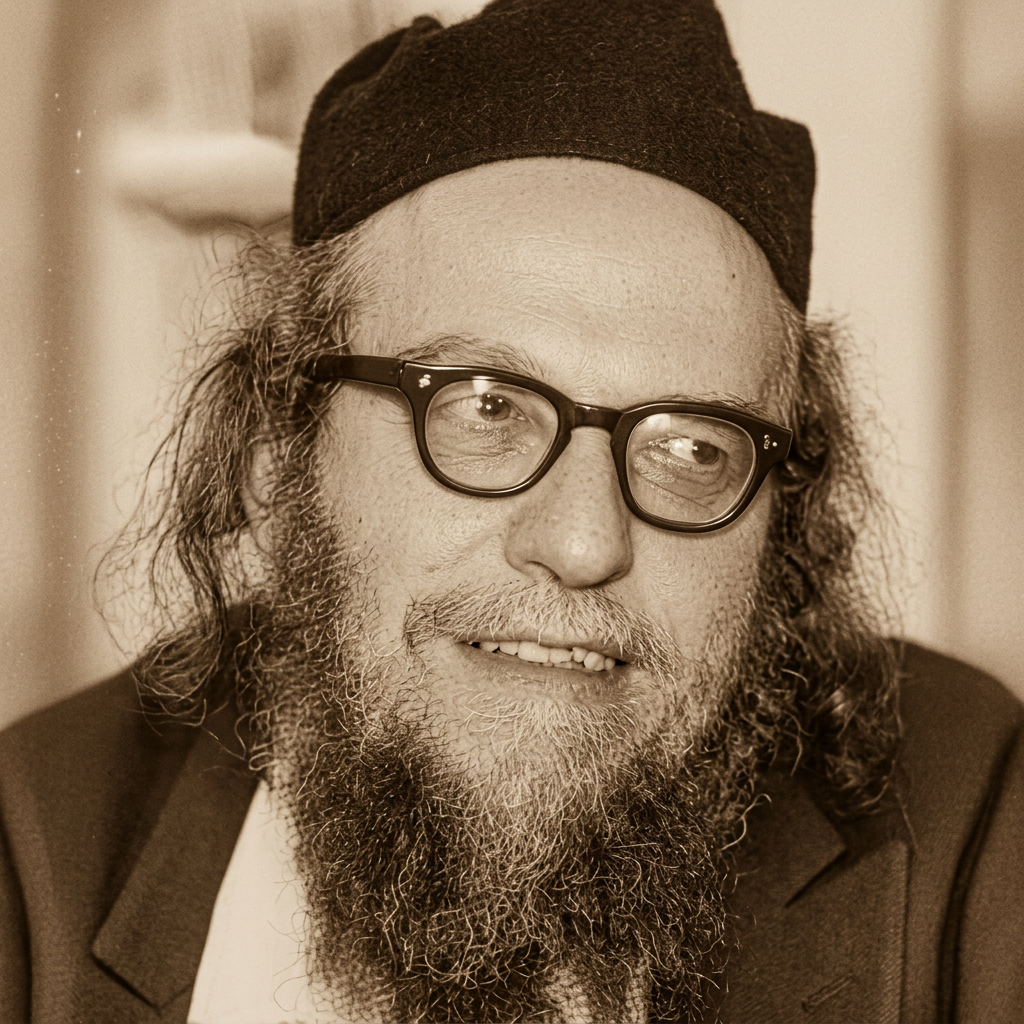
Grave of Rabbi Yisroel Zev Gustman
Rabbi Yisroel Zev Gustman (1908–1991) was an extraordinary Talmudic genius, a prominent rabbinic judge (Dayan) in pre-war Europe, and a legendary Rosh Yeshiva who later rebuilt his institution in both New York and Jerusalem.
The Prodigy of Vilna
Born in Lithuania, Rabbi Gustman was recognized in his youth as an illui (child prodigy). He learned in Grodno alongside other future Torah giants like Rabbi Chaim Shmuelevitz and studied under the famed Rabbi Shimon Shkop.
His rise to prominence was historic:
The Youngest Judge: At just 20 years old, he married Sarah Bassin, the daughter of Rabbi Meir Bassin.Following his father-in-law's sudden passing shortly before the wedding, the young Rabbi Gustman inherited his positions.
Despite his youth, he became a Rosh Yeshiva at the prestigious Ramailes Yeshiva in Vilna and was appointed as a rabbinic judge on the renowned Beis Din (rabbinical court) of Rabbi Chaim Ozer Grodzinski—making him the youngest Dayan in Vilna's history.
Wartime Survival and Unfathomable Loss
When World War II broke out and the Nazis occupied Vilna, the Jewish community faced total devastation.Rabbi Gustman survived through extraordinary close calls, at various times hiding among corpses, in caves, and even in a pigpen.
Tragically, during an action in the ghetto, his young son, Meir, was brutally snatched from his arms and murdered. This devastating loss deeply shaped the rest of his life. He, his wife Sarah, and their daughter miraculously survived by fleeing into the forests.
A well-known aspect of his survival involves his mentor, Rabbi Chaim Ozer Grodzinski. Years before the war, while taking countryside walks, Rabbi Chaim Ozer had pointed out various wild plants to Rabbi Gustman, explaining which ones were safe to eat and how to prepare them in an emergency. This unexpected lesson ultimately saved Rabbi Gustman's life while he was hiding in the forests.
Post-War Rebuilding: From Brooklyn to Jerusalem
After the war, Rabbi Gustman initially returned to Vilna to help survivors, organize religious affairs, and resolve complex marriage issues (agunot). Facing threats of exile to Siberia by a Communist commissar, he fled to France and eventually immigrated to the United States with the help of activists.
The American Chapter: In New York, with the mediation of Rabbi Moshe Feinstein, he was appointed Rosh Yeshiva of Yeshivas Tomchei Temimim Lubavitch in Brooklyn. He later established his own yeshiva there, Netzach Yisrael-Vilna Ramailis, keeping the memory of his original Vilna school alive.
The Move to Jerusalem: In 1971, he immigrated to Israel and established the Netzach Yisroel - Vilna Ramiles Yeshiva in the Rechavia neighborhood of Jerusalem.
A Unique Leadership Style in Rechavia
In Jerusalem, Rabbi Gustman became a uniquely beloved figure, intentionally avoiding the public limelight while remaining deeply revered by scholars.
The Elite Shiur (Lecture): On Thursday afternoons, he delivered a legendary, high-level lecture in Yiddish. This open class attracted a highly diverse crowd of advanced Torah scholars, community members, and prominent secular intellectuals, including professors (such as Nobel Laureate Robert J. Aumann) and a Supreme Court justice.
Honoring the Fallen: During the 1982 Lebanon War, Professor Aumann’s son, Shlomo, fell in battle.Rabbi Gustman mobilized his entire yeshiva to participate in the burial. He deeply moved the grieving father by sitting with him and sharing the pain of losing his own son, Meir, during the Holocaust.
A Love for Children: Rabbi Gustman never let his trauma control his life. He and his wife made a point of attending annual parades in Jerusalem just to watch children sing and dance. When questioned by another rabbi why he spent his time watching something so simple, he profoundly responded: "We who saw a generation of children die, will take pleasure in a generation of children who sing and dance in these streets."
Rabbi Gustman passed away on June 10, 1991 (28 Sivan 5751) and was buried on the Mount of Olives. His summaries of his exhaustive lectures were published in a multi-volume series titled Kuntresei Shiurim, which remains highly studied in the yeshiva world today.