
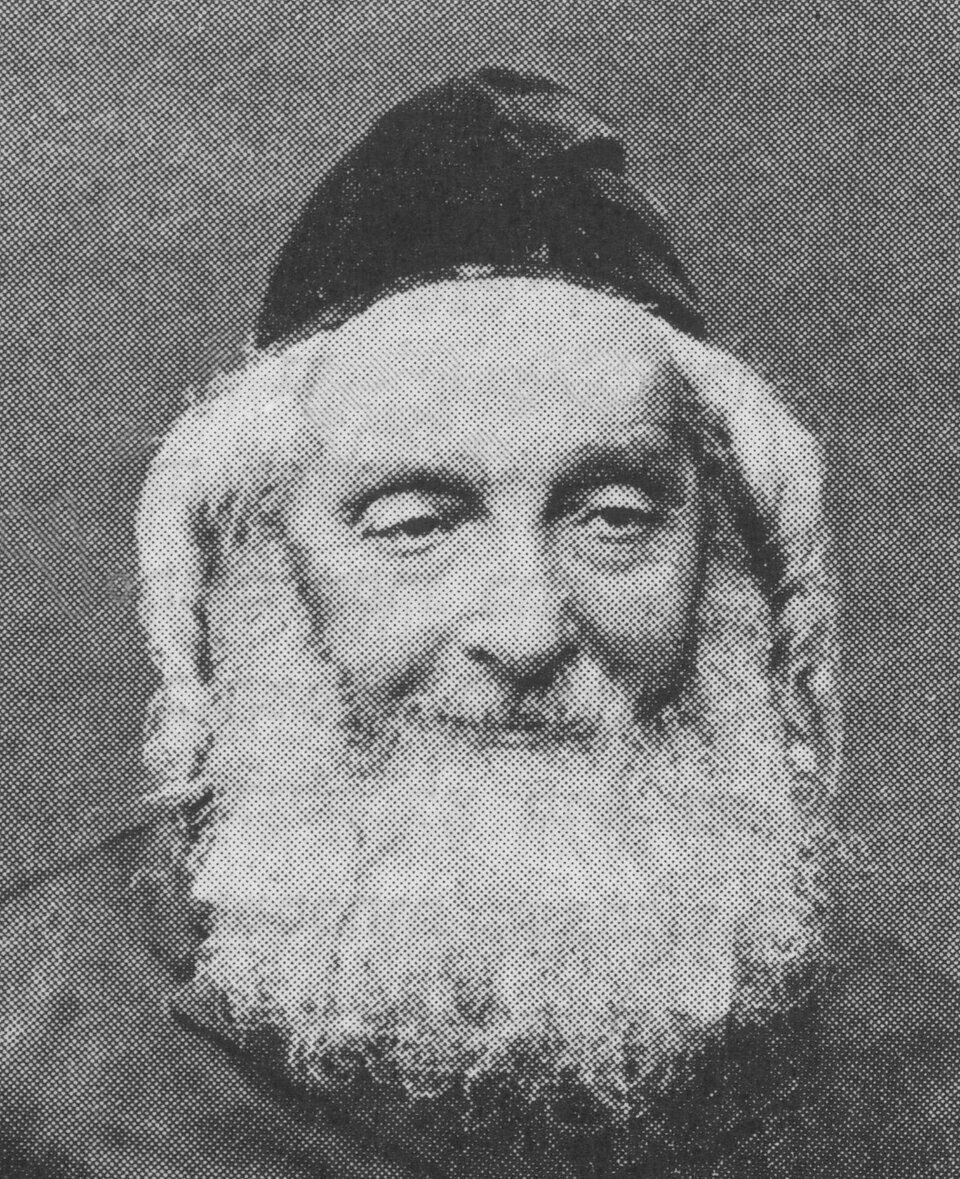
Grave of Rabbi Naftali Tzvi Yehuda Berlin (Netziv)
Rabbi Naftali Tzvi Yehuda Berlin (1816–1893), universally known by his Hebrew acronym The Netziv, was one of the most prominent rabbinic figures of 19th-century Europe. As the long-time, legendary Rosh Yeshiva of the Volozhin Yeshiva (the "Mother of Yeshivas"), he shaped a generation of Jewish leaders and pioneered a highly distinct, literal approach to Torah study.
1. Inheriting the Crown of Volozhin
Born in Mir, Russia (now Belarus), the Netziv came from a distinguished family of scholars. He was a brilliant student, and at a young age, he married Rashka, the daughter of Rabbi Yitzchok of Volozhin (the son of the yeshiva's founder, Rabbi Chaim of Volozhin).
When his father-in-law passed away in 1849, a leadership crisis emerged. Ultimately, the Netziv was chosen to head the Volozhin Yeshiva, a position he held for four decades. Under his guidance, Volozhin reached its absolute zenith:
The Harvard of Yeshivas: Volozhin became a massive institution, drawing hundreds of elite, top-tier students from across Europe.
Famous Disciples: Under the Netziv's tutelage, a legendary roster of students emerged, including Rabbi Chaim Soloveitchik (who later became his co-Rosh Yeshiva and developed the "Brisker method"), the Chofetz Chaim, and the famous Hebrew poet Chaim Nachman Bialik.
2. His Unique Method of Study (Derech HaNetziv)
During an era where many yeshivas favored Pilpul—a highly complex, sometimes convoluted style of sharp legal casuistry—the Netziv championed a radically different approach:
Peshat (The Literal Meaning): He demanded that students focus on the straightforward, structural text of the Talmud and its earliest commentators (the Rishonim). He believed in understanding what the text actually said rather than building abstract theoretical towers.
Mastery of Tanach (The Bible): Uniquely for European Rosh Yeshivas of his day, the Netziv delivered a daily lecture on the weekly Torah portion. He viewed the text of the Torah as structurally flawless and exact, analyzing why specific words or grammatical structures were used. These lectures formed the basis of his famous commentary, Ha'amek Davar.
3. The Great Trait: An Unfathomable Love for Students
While he was a towering intellectual, the Netziv is remembered in Jewish history for his staggering, emotional devotion to his students.
The Midnight Checks: He would walk through the dark Volozhin study hall in the middle of the night. If he saw a student falling asleep over his book, the Netziv would gently cover him with his own coat or adjust his pillow, weeping out of love for the boy's devotion.
The "Father" of Hundreds: Because students traveled from far away and lacked resources, the Netziv and his wife took personal, parental responsibility for their health, laundry, and physical well-being. When a student fell ill, the Netziv would routinely sit by their bedside for hours.
4. The Tragic Closure of Volozhin
The Netziv’s leadership faced its ultimate, heart-wrenching test against the Tsarist Russian government.
As part of a forced secularization program, the Russian authorities demanded that the Volozhin Yeshiva introduce secular subjects (like the Russian language and mathematics) and drastically reduce the hours dedicated to Torah study. Furthermore, they demanded that the yeshiva staff hold official secular degrees.
The Netziv faced an impossible dilemma. He understood that if he compromised, the core nature of an authentic yeshiva would be lost forever. In 1892, refusing to yield to the Tsarist decrees, the Netziv made the agonizing decision to close the Volozhin Yeshiva. The Russian government forcibly expelled the students, and the crown jewel of the Torah world was darkened.
5. Death and Lasting Literary Legacy
The heartbreak of losing his life's work took a devastating physical toll on the Netziv. Shortly after the closure, he suffered a stroke and passed away a year later, on August 10, 1893 (28 Av 5653), in Warsaw, Poland. He is buried in the Okopowa Street Jewish Cemetery in Warsaw.
Though the physical walls of Volozhin fell, his intellectual legacy remains a central staple of every modern yeshiva through his classic published works:
Ha'amek Davar: His brilliant, highly analytical commentary on the Torah.
Meromei Sadeh: His extensive, fast-paced analytical commentary on the Talmud.
Meshiv Davar: A multi-volume collection of his halachic responsa, answering complex legal questions sent to him from Jews all over the globe.