
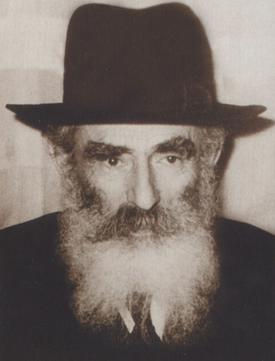
Grave of Rabbi Yechezkel Levenstein (Reb Chatzkel)
Rabbi Yechezkel Levenstein (1885–1974)—universally and affectionately known as Reb Chatzkel—was one of the most legendary masters of the Mussar (ethical and spiritual development) movement in the 20th century.
Serving as the Mashgiach Ruchani (spiritual dean) of both the Mir Yeshiva and the Ponovezh Yeshiva, Reb Chatzkel was viewed by his contemporaries as a living relic of an older world. He was famous for a level of pure, unshakeable faith (Emunah) and absolute trust in God (Bitachon) that was so intense it was described by other sages as nearly tangible.
1. Spiritual Roots in the Citadels of Mussar
Born in Warsaw, Poland, Reb Chatzkel lost his mother when he was only five years old. He grew up experiencing immense poverty and hardship, which ultimately fueled his complete detachment from material desires.
As a young young man, his soul caught fire when he entered the world of the Lithuanian yeshivas. He studied in the premier academies of spiritual character building:
Radin: He studied under the holy Chofetz Chaim and developed a lifelong bond with the great Mussar master Rabbi Yeruchom Levovitz.
Kelm: He capped off his education in the famed Kelm Talmud Torah, an elite institution known for its military-like self-discipline, extreme psychological order, and absolute refinement of character traits.
2. Captaining the Mir Yeshiva Through the Shanghai Exile
When Rabbi Yeruchom Levovitz passed away in 1936, Reb Chatzkel was asked to take over as the spiritual leader of the Mir Yeshiva in Poland. He took the mantle just as Europe was about to plunge into darkness.
When World War II erupted in 1939, the entire Mir Yeshiva fled the Nazi advance, embarking on a miraculous escape across Siberia and eventually finding refuge in the Shanghai Ghetto in Japanese-occupied China. While the Rosh Yeshiva, Rabbi Eliezer Yehuda Finkel, was separated from the group, Reb Chatzkel became the operational captain, father figure, and spiritual anchor for over 250 students trapped in Shanghai for five grueling years.
The Shield of Faith: Amid starvation, tropical disease, and extreme psychological terror, Reb Chatzkel delivered fiery daily discourses (shmuessen). He constantly drilled into the students that their survival did not depend on geopolitics or luck, but explicitly on their focus on Torah study and their trust in God.
Many survivors later noted that it was Reb Chatzkel’s supernatural calmness and absolute certainty that they would survive that kept the entire student body from collapsing into despair.
3. Post-War: America and the Move to Ponovezh
After the war ended, Reb Chatzkel accompanied the surviving Mir students to the United States, helping establish the American branch of the Mir Yeshiva in Brooklyn, New York.
However, his time in America was short-lived. Reb Chatzkel was deeply uncongenial to the growing post-war American materialism, famously remarking that the spiritual "air" of the West was spiritually contagious, even within the four walls of a study hall. In 1949, he immigrated to Israel, serving briefly again as the Mashgiach of the Mir in Jerusalem.
Succeeded at Ponovezh
In 1954, following the passing of the famous Mashgiach Rabbi Eliyahu Eliezer Dessler (author of Michtav M'Eliyahu), the legendary Ponovezh Rav (Rabbi Yosef Shlomo Kahaneman) traveled to Jerusalem to beg the 70-year-old Reb Chatzkel to take over the spiritual leadership of the Ponovezh Yeshiva in Bnei Brak. He accepted the position and spent the final twenty years of his life turning Ponovezh into the absolute premier fortress of the Lithuanian yeshiva world.
4. Distinctive Traits and the "Palpable" Emunah
The great halachic authority of the era, the Chazon Ish, famously remarked that while many people intellectually understand faith, "Reb Chatzkel holds Emunah right in his hands." He lived a life where the spiritual world was entirely real and the physical world was a mere illusion.
"You Have to Blind Not to See It"
During a famous lecture in Ponovezh, Reb Chatzkel suddenly stopped speaking, pounded heavily on the podium, and shouted with raw emotion to the students:
"You can experience Emunah and feel it with your bare hands! You would have to be completely blind not to see God's hand in every single step we take in this world! You have to shut your eyes tight to miss it!"
Disdain for Materialism
Reb Chatzkel lived with extreme simplicity, shunning any honor or luxury. In his old age, he wrote a letter reflecting on his life, noting: "I was never attached to the matters of this world (Olam Hazeh)—and yet, what a beautiful, good world I have truly enjoyed." He fiercely believed that true happiness was entirely internal and tied to one's attachment (Deveikut) to the Divine.
5. Passing and Published Legacy
Reb Chatzkel passed away on March 12, 1974 (18 Adar 5734) in Bnei Brak, Israel, at the age of 89. His funeral was attended by tens of thousands of grieving students and sages from across the country.
His extensive, deeply psychological, and moving ethical discourses were later meticulously gathered and compiled by his students into a foundational 7-volume classic titled Or Yechezkel (The Light of Yechezkel). This series remains required reading in yeshivas worldwide for anyone seeking to master the depths of Jewish ethics and authentic, unshakeable faith.